Cold Plunge Chiller vs Ice: Which Is Cheaper?
A cold plunge chiller ($3,600 to $4,000) is cheaper than buying ice if you plunge most days; at five sessions a week it can pay for itself in about a year and a half. If you plunge once or twice a week, ice is cheaper.
By John Voll · Updated Oct 27, 2026 · We may earn a commission from links
How much ice it takes
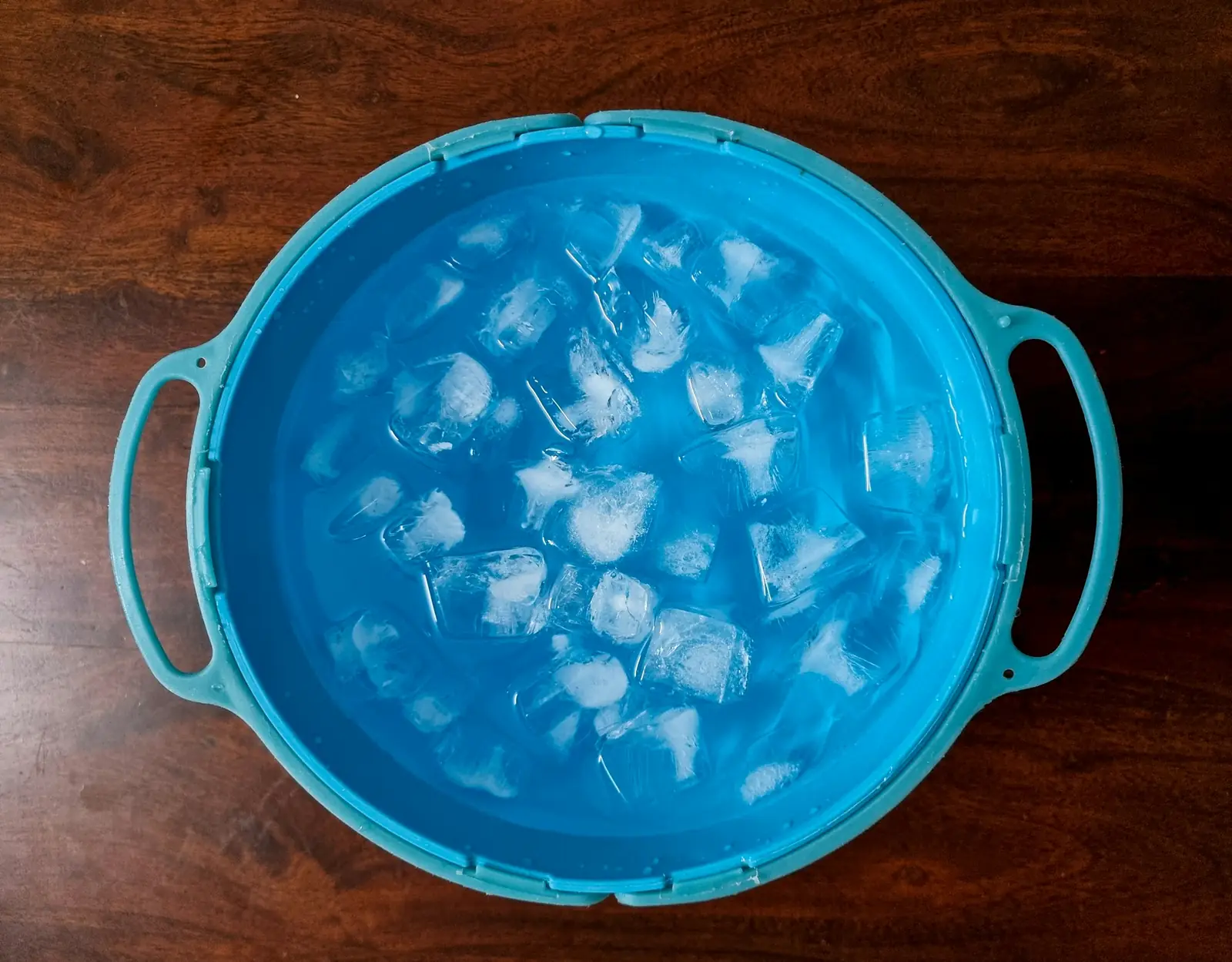
Say your tap water comes out at 60°F and you want 45°F in a 94-gallon tub like the Ice Barrel 500. Cooling 94 gallons by 15 degrees takes roughly 75 pounds of ice, based on how much heat melting ice absorbs. That is before the water starts warming back up and before your body adds heat.
If you change the water weekly and top up with ice between sessions, you will be buying ice most days. Colder tap water helps; a hot garage in summer makes it worse. Insulation helps most. The Ice Barrel lists R-16 foam in the walls and lid, which is the number to look at on any tub without a chiller.

When the chiller pays for itself
Say ice costs you $10 per plunge after the first fill (use your own store's price). At five plunges a week, that is about $2,600 a year, so a $4,000 chiller pays for itself in about a year and a half, and the water is filtered and cold whenever you want it. At two plunges a week, the same chiller takes almost four years. This leaves out the chiller's own electricity, but the pattern holds: the more often you plunge, the better the chiller looks.
| Model | Price | What the price buys | Link |
|---|---|---|---|
| Sun Home Smart-Chiller | $3,599 | Size: 1 HP | View |
| Plunge Pro Chiller | $3,990 | View | |
| Ice Barrel Chiller | $3,999.99 | Size: 1/2 HP | View |
Lowest listed configuration on each maker's store, checked Oct 27, 2026.
What a chiller needs from your house
- A dedicated circuit. Plunge asks for a dedicated 120V, 15-amp circuit for the All-In, meaning nothing else on it. Sun Home asks for a dedicated 15-amp GFCI circuit. BlueCube's DROP needs 20 amps.
- Airflow. A chiller moves heat out of the water and into the room. Plunge asks for 16 inches of clearance on the fan side of the All-In; a chiller in a small closet heats the closet.
- Time on day one. Plunge lists a cooling rate of 10 to 12 degrees per hour for the All-In, so a fresh fill of warm water takes a few hours.
Chiller sizes vary: Ice Barrel's stand-alone chiller is 1/2 HP, the Plunge All-In uses 0.75 HP, and Sun Home's is 1 HP. More horsepower cools faster and copes better in a hot garage. The rated floor is usually 37°F; Sun Home's 1 HP units list 32°F, depending on the room.
Common questions
How much does a cold plunge cost?
On the makers' own stores in October 2026, an insulated tub without a chiller cost $1,150 to $2,700, a tub with a chiller $4,099 to about $7,000, premium chilled tubs $8,490 to $11,750, and Sun Home's Pro $14,599. A stand-alone chiller cost $3,599 to $3,999.99.
Sources
- Ice Barrel, Ice Barrel 500 (94 gal, R-16 insulation)
- Ice Barrel, Ice Barrel Chiller (1/2 HP)
- Sun Home, Smart-Chiller (1 HP)
- Plunge, Pro Chiller
- Plunge, Plunge All-In (dedicated 120V 15A circuit, cooling rate)
- Sun Home, Cold Plunge Horizontal (110 to 120V, 15A dedicated GFCI)
- BlueCube, DROP (dedicated 120V 20A)
Prices and specs are from each maker's own product page on the date shown next to them. Prices change; the store is always right and we may be out of date.
Related guides
Best cold plunges
Best cold plunge tubs by budget, from $1,150 ice tubs to $15,000 chilled units, with each maker's specs, power needs and prices.
Plunge vs Ice Barrel
Plunge vs Ice Barrel compared: size, water, chiller, fit and price of the Plunge All-In and Ice Barrel 500, from each spec sheet.
Sauna + cold plunge setup
Sauna and cold plunge at home: circuits, spacing and bundles compared, plus a build-your-own setup that costs less than the bundles.